

18 Hours → 18 Minutes: How DestiLabs Automated Upwork Bidding

How DestiLabs Cut Upwork Bidding From “18 Hours” to 18 Minutes — and Saved ~20 Hours/Week With GigRadar
Client Overview
DestiLabs is a small AI/ML agency with three developers (plus co-founders). Upwork used to be a core lead source, but the team quickly hit the same ceiling most AI agencies hit: manual bidding eats time, focus, and budget.
As Iryna put it: “We’re a small AI ML agency… at the beginning they had a dedicated person… bidding, applying for the jobs. It was okay. But all this manual work is not what AI agencies would like to deal with.”
Starting Point
Before GigRadar:
- A dedicated person (lead generator / VA-style role) handled manual job applications.
- The team applied broadly: ~90 jobs/week, often not fully relevant — meaning wasted Connects and attention.
- Manual work was slow and inconsistent (and dependent on a person’s capacity).
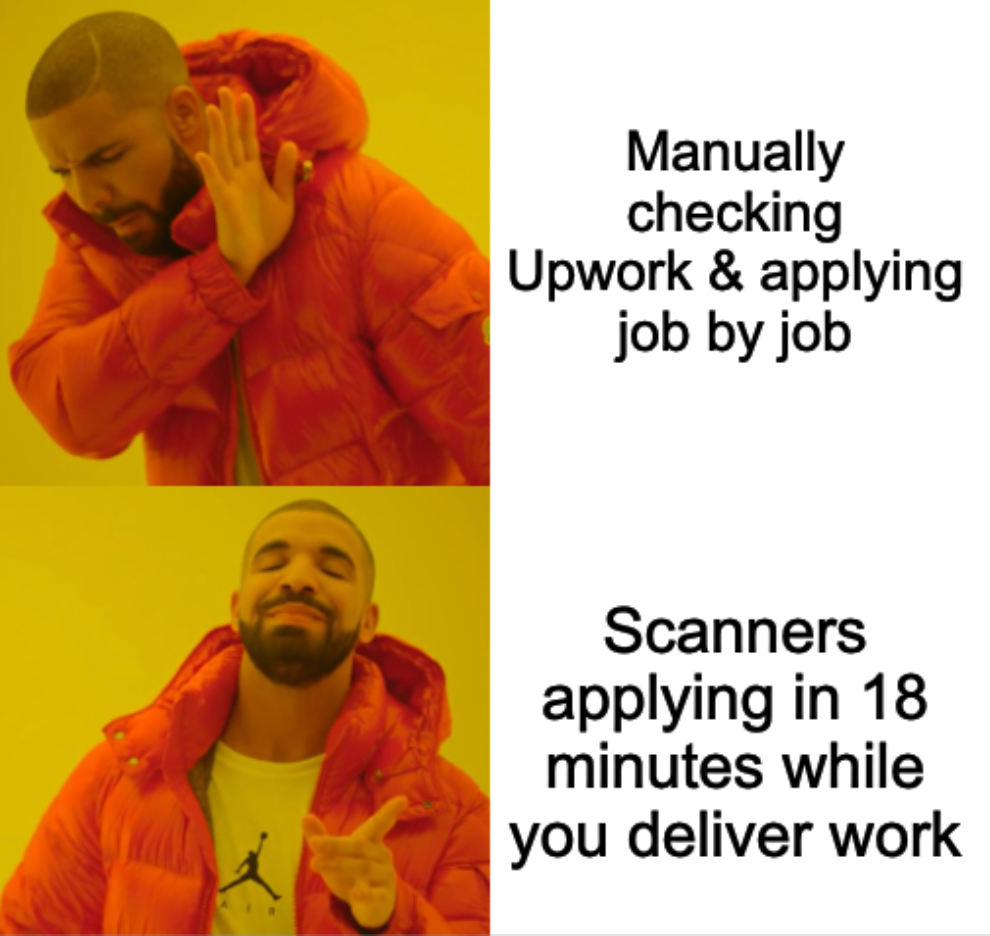
“Previously we’ve applied to around 90 jobs per week so we were wasting money on connects even though they were not that relevant for us.”
The Challenge
DestiLabs needed speed + relevance — because on Upwork, speed is a competitive advantage, and relevance is what protects margin (especially with a premium rate).
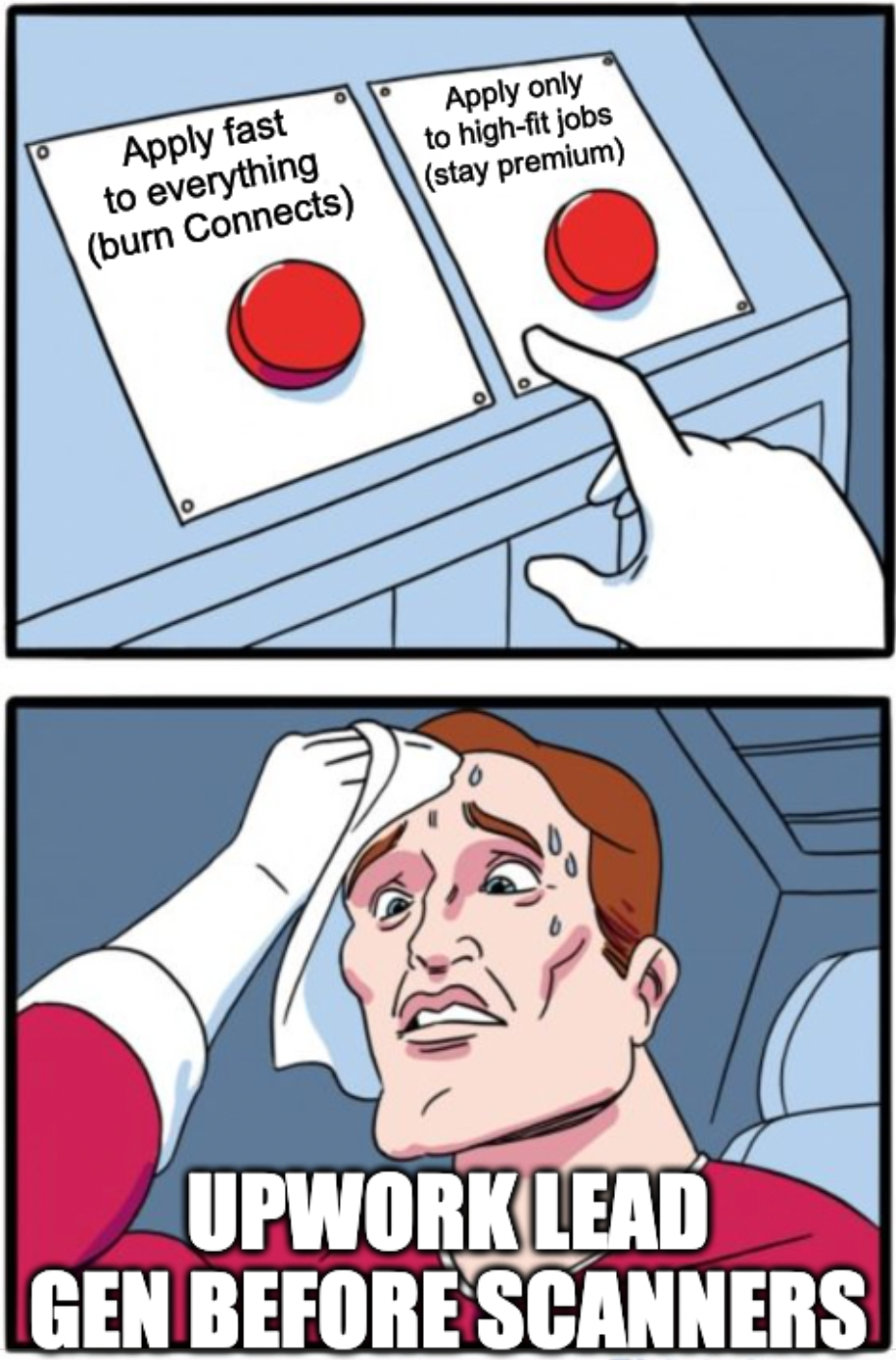
They also sell at a higher rate (70+), so sending proposals to low-fit jobs (or jobs with weak client quality signals) was costing them twice: Connects + opportunity cost.
Why GigRadar
They discovered GigRadar through TRC / Top Rated Club and validated it the pragmatic way: by comparing outcomes and hearing other agency owners’ numbers.
“Once we’ve heard of GigRadar inside of the TRC, we checked the numbers from other agency owners and decided that we need to give it a try.”
Two core buying triggers:
- Speed (response-time advantage)
- Relevance (reduce Connect waste, focus on higher-fit opportunities)
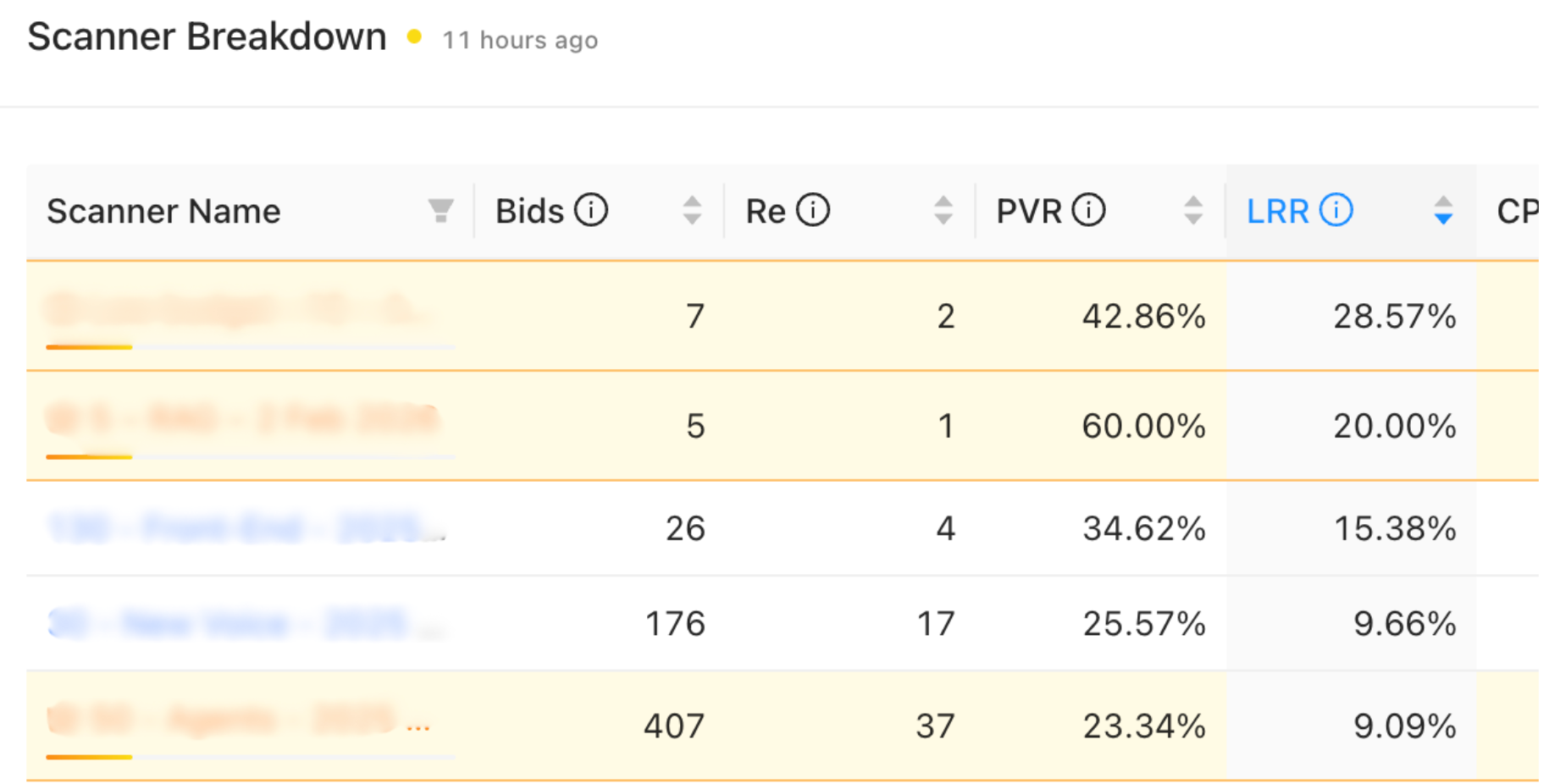
Implementation
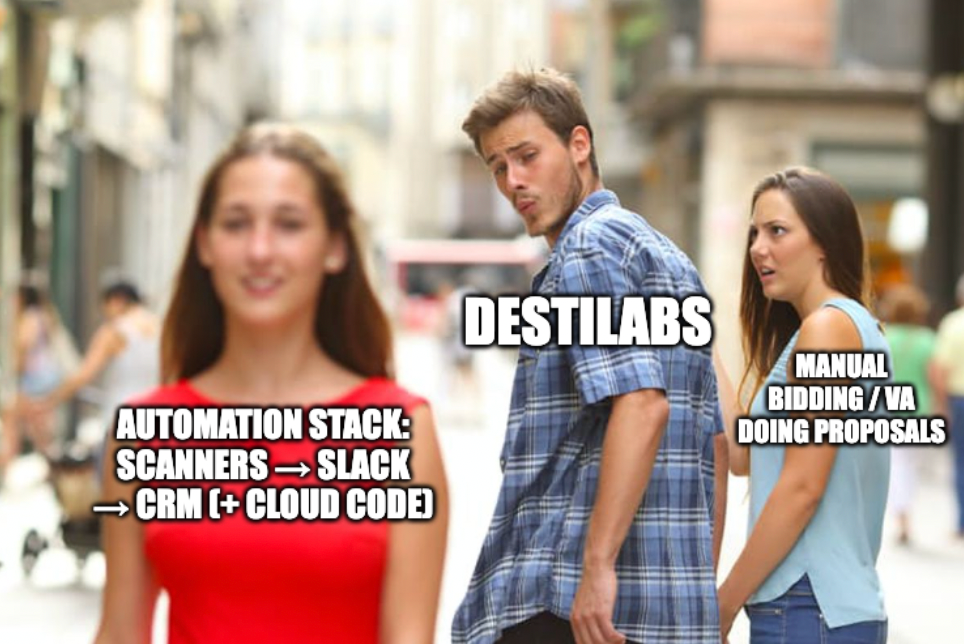
DestiLabs approach was “make it part of an automation stack.”
1) Shift manual bidding → scanner-driven pipeline
They moved away from a human-driven lead gen role and relied on GigRadar scanners as the default mechanism.
2) Build internal automation around GigRadar (Slack → CRM)
They connected workflows to Slack triggers and pushed context into their CRM so the team can respond faster and keep everything centralized.
3) Layer AI-assisted proposal support (Cloud Code)
They built their own “proposal intelligence” using their project history + examples, so responses can stay consistent and on-brand.
4) Identify the next bottleneck: deeper scanner filters (score-based)
After squeezing most standard filters, they want to go one level deeper:
- Use GigRadar score as an explicit filter inside scanners
- Filter by client quality + ability to pay (avg paid rate, spend, hiring patterns)
- Potentially via API so they can run custom automations
Results
1) Speed: “18 hours” → 18 minutes
This became their clearest before/after proof — and it’s exactly the type of metric Upwork operators care about. “The speed of applying is… 18 minutes compared to 18 hours if you’re doing it ourselves for some random jobs.”
2) Connect savings through relevance
They stopped “spraying” proposals and tightened the funnel to reduce waste.
3) Operational savings: ~20 hours/week
They estimate time saved at roughly 20 hours weekly — not by “working less,” but by removing repetitive labor from the system.
ROI
DestiLabs didn’t want to overclaim deal-based ROI because outcomes fluctuate with seasonality and market dynamics — but time-based ROI was straightforward. They estimate the subscription “paid for itself” roughly within ~2 weeks, purely from reclaimed time.
“We can say… it paid for itself in two weeks… it is saving right now around 20 hours per week for us.”
This case also reinforces a pattern we see across strong Upwork operators: tools don’t replace systems — they become system components. DestiLabs treats automation as a philosophy, not a feature. And their recommendation is clear:
“I would also recommend to jump on this train and start automating as soon as possible… that’s the future.”
Takeaway
DestiLabs didn’t “switch tools.” They removed an entire category of manual labor, tightened relevance to protect Connect budget, and built an automation layer that keeps their premium positioning intact.
If you’re still doing manual bidding because “that’s how Upwork works,” DestiLabs proof is simple: Upwork rewards speed — and speed is easiest to scale when you stop doing repetitive work by hand.



