
Clay vs Apollo walkthrough (2 min): when waterfall enrichment beats Apollo's all-in-one database for agency outbound. Watch on YouTube.
Clay vs Apollo: TL;DR
- Apollo claims 91% email accuracy. A 900-lead re-verification of Apollo's "Verified" exports found only 19% actually valid, with 60% catch-all. Bounce rates of 12-14% are routine without a secondary verifier.
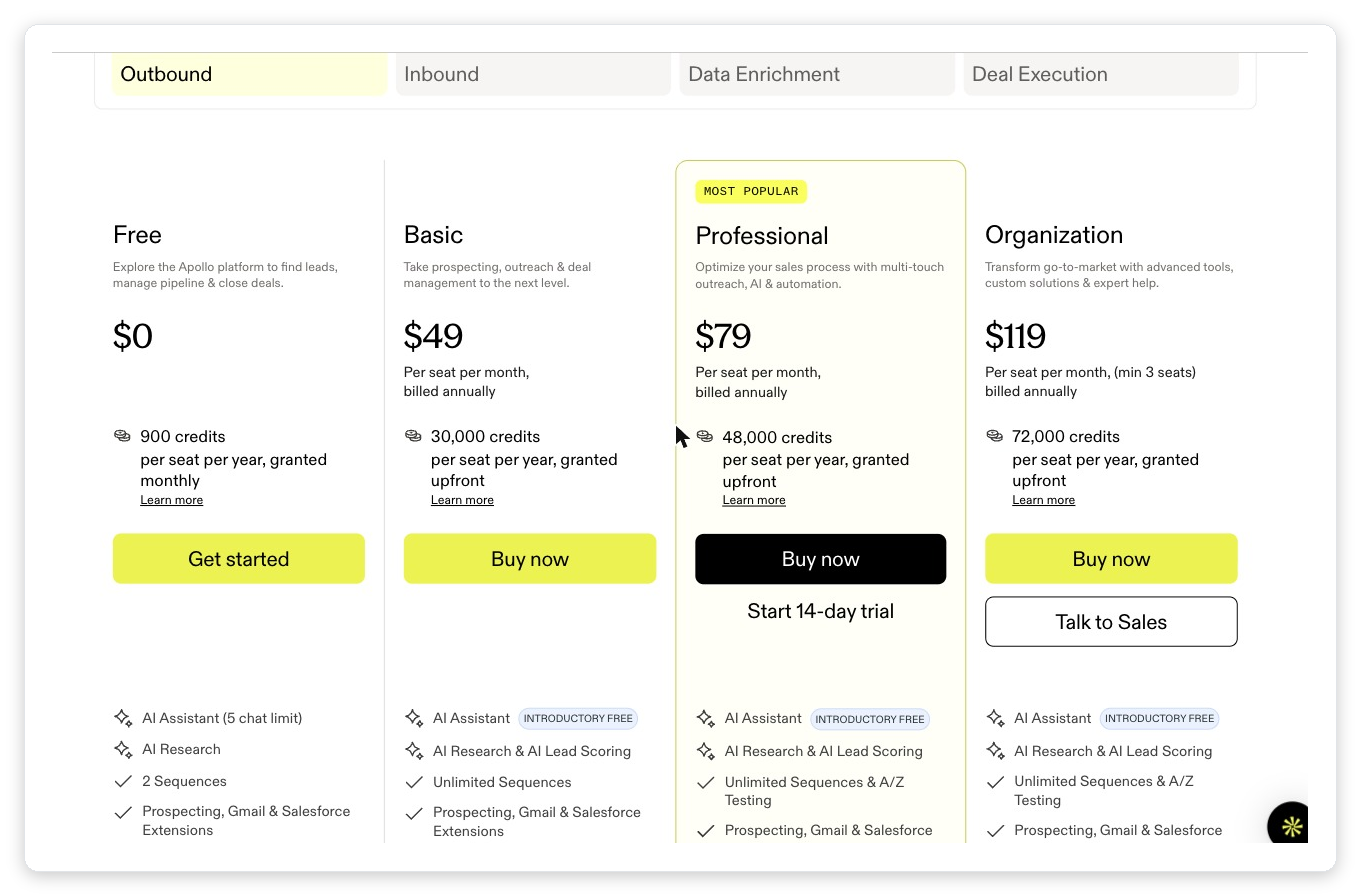
- Apollo's seat pricing ($49-$119 per seat per month) is misleading. The real cost is Apollo plus ZeroBounce or MillionVerifier, which puts the all-in cost-per-deliverable email around $0.04-$0.06.
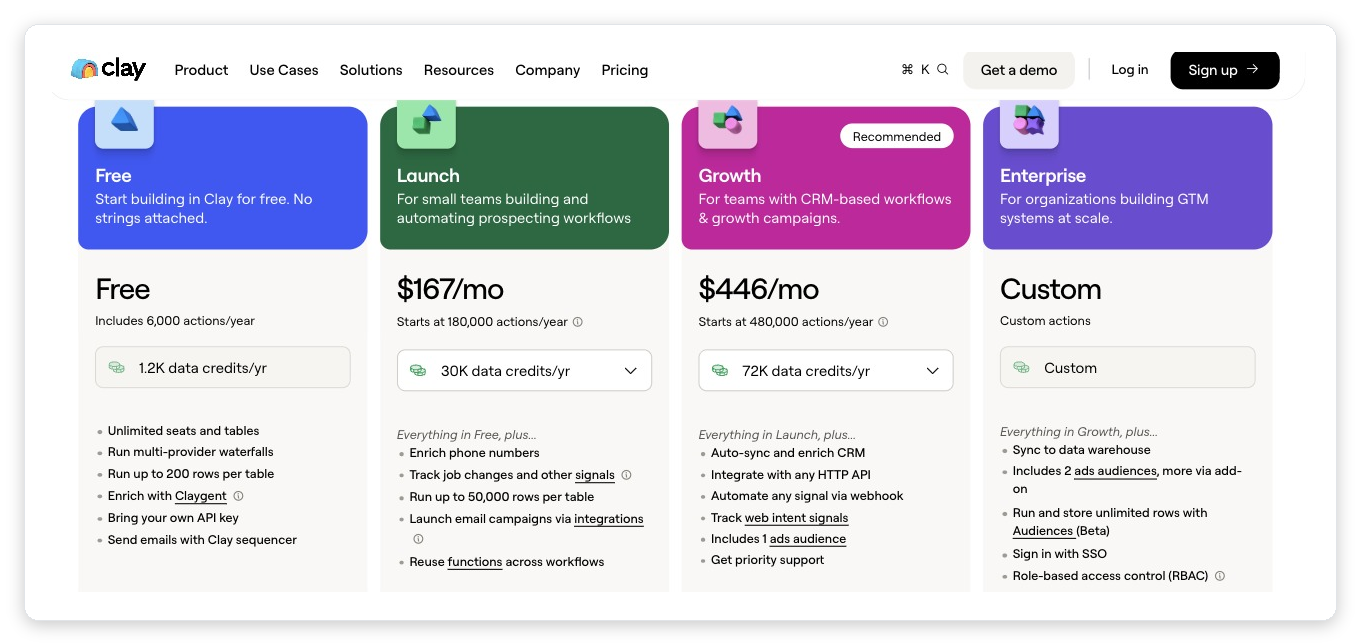
- Clay's $185-$495 per month is a whole-team license but pure orchestration. You still pay providers (Apollo, Cognism, Dropcontact) inside Clay and you bolt on Smartlead or Instantly for sending.
- Picking by price is the wrong question. Pick by whether you can operate a waterfall: agencies running multi-ICP outbound win with Clay; lean SDR teams running US mid-market sequences win with Apollo.
- The hybrid play (Apollo data inside Clay using "Use an API" block) skips Clay's per-row credits and is what most serious 2026 agencies actually run.
Apollo says its email database is 91% accurate. A user on r/coldemail ran 900 Apollo leads marked "Verified" through MillionVerifier and got 19% valid, 21% invalid, and 60% catch-all.
That gap is the entire reason this Clay vs Apollo comparison exists. Picking between Clay and Apollo is not a feature checklist. It's a question about whether you trust a vendor's verification label or whether you architect around it.
Apollo's "Verified" label is doing a lot of work
Apollo's official documentation claims 91% accuracy. The newer marketing site bumps that to 97% accuracy. Both numbers are credible if you define "accuracy" the way Apollo does.
Apollo treats catch-all domains as "Verified". A catch-all domain accepts every incoming email at the SMTP layer and decides later whether to deliver, bounce, or silently drop it. Microsoft 365 ships with catch-all behaviour by default, which means most enterprise email tenants look like catch-alls to any verification tool.
Apollo's leads generate a 2.06% spam complaint rate. Non-Apollo lead sources sit at 0.007%. That's a 294x gap, and complaint rate is the single fastest way to get a sending domain blacklisted (source).
Independent testing fills in the rest of the picture. Cleanlist's 500-lead head-to-head benchmark measured Apollo at 78.1% deliverable (versus ZoomInfo 83.7% and Hunter 65.3%). Discury's 2026 aggregate report pegs Apollo at 12-14% routine bounce rates across sales-dev teams that send without a separate verification step.
None of this means Apollo's data is bad. It means the "Verified" badge is a soft signal you have to architect around, not a hard guarantee you can ship on.
What it actually costs per verified email
The seat price and the credit price are both misdirection. The number you care about is dollars per email that actually lands in a real inbox, and once you bolt on a verifier the math looks different from either pricing page. We broke the broader cost picture down in our analysis of data enrichment tools for B2B agencies if you want the seven-tool spread.
Drop your real-world inputs into the calculator below and you'll see the spread.
Interactive Calculator
Cost per verified email: Clay vs Apollo
Enter your monthly volume. Watch the per-deliverable cost diverge.
Defaults: Apollo Professional at $79/seat/month plus ZeroBounce verifier at $0.0017/email. Clay Growth at $495/month plus a balanced 14-credit waterfall (Apollo basic + Hunter + Dropcontact + verifier) costing ~$1.10 per attempted lead at the Growth tier rate.
Most agencies discover the crossover the hard way. Apollo is cheaper at low volume because the seat license dominates. Clay gets cheaper as volume grows because your waterfall amortises against the fixed monthly license.
The accuracy input is where the spread opens. A 12-point deliverable difference (75% Apollo, 88% Clay) is conservative based on the public benchmarks above. Push Apollo's accuracy down to 65% (which is what Cleanlist measured for catch-all-heavy verticals) and Clay wins at almost every volume.
The pricing models are completely different animals
Apollo bills per seat. Clay bills per workspace. That single difference shapes who each tool is built for.
Apollo's Professional tier is $79 per seat per month with 48,000 credits per seat per year. A 3-person SDR team pays $237/month minimum, scales linearly. Organization tier is $119 per seat with a 3-seat minimum, so the real floor is $357/month for any team that wants the advanced features.
Clay's Growth plan is $495/month for the whole workspace with 6,000 data credits and 40,000 actions monthly. Add as many people as you want at no per-seat cost. The catch is that those credits get consumed by every enrichment lookup, every Claygent AI call, every Apollo-inside-Clay match.
Email waterfalls auto-refund credits on a miss. Non-email waterfalls (phone, LinkedIn URL, technographics) do not. One Explorer-plan user reported a $200 overage in week 3 from Claygent runs at 10-25 credits per row.
Feature parity is the wrong frame
Side-by-side feature lists make the tools look interchangeable. They're not. Apollo is a database product. Clay is an orchestration product. The features they "share" exist for completely different reasons.
| What you actually get | Clay | Apollo |
|---|---|---|
| Entry tier | Free: 100 credits + 500 actions/mo | Free: 75 credits/seat + ~10K email credits/account/mo |
| Working tier | Launch $185/mo (2,500 credits) | Professional $79/seat/mo |
| Scale tier | Growth $495/mo (6K credits + 40K actions) | Organization $119/seat/mo (3 seat min) |
| Built-in B2B database | None. Chains 100+ providers | 230M+ contacts, 30M+ companies |
| Waterfall enrichment | Yes, core product | No, single source |
| Independently tested deliverable rate | ~86-90% on tuned waterfalls | ~73-78% without secondary verifier |
| Phone / mobile data | Pay per provider (Cognism, ZoomInfo) | 75/mo (Basic) to 200/mo (Org), ~65% accuracy |
| Built-in sequences | No. Bolt on Smartlead or Instantly | Yes. Multi-step + A/B/Z testing |
| Dialer | No | Yes. US + international + parallel |
| Non-US data quality | Strong via Cognism/Dropcontact | Weak outside US/UK |
| Best fit | Agencies, RevOps, multi-ICP outbound | Lean SDR teams, US mid-market |
The two tools that look most similar on paper (built-in enrichment) work nothing alike. Apollo's enrichment runs against its own database. Clay's enrichment runs against whatever provider you put first in the waterfall, then falls through if the lookup fails. Different mental model entirely.
If you're cross-shopping Apollo against the obvious other database (ZoomInfo), we have a separate Apollo vs ZoomInfo comparison with the per-seat ROI math. This article assumes you've already decided you don't want enterprise pricing.
The decision framework (pick by what you actually do)
The right tool depends on which of these statements is true for your agency. If three or more apply, you have your answer.
Use Apollo if
- You're a 1-10 person SMB sales team and want a working stack on day one without integrating five tools.
- Your prospects sit in US mid-market with standard email patterns.
- You will always run a secondary verifier (ZeroBounce or MillionVerifier) before sending. Non-negotiable.
- Your team needs a dialer for cold calling. Clay can't make calls.
- Budget is the constraint, and you'd rather have one $79/seat tool than five tools at $30 each.
Use Clay if
- You're an agency running outbound for 5+ clients with different ICPs. Provider flexibility per campaign matters.
- You target non-US markets (EMEA or APAC) where Apollo's data is weakest and Cognism/Dropcontact win.
- You need mobile phone data at scale. Clay's Cognism and ZoomInfo waterfalls beat Apollo's ~65% mobile match rate.
- You're building AI-driven personalization (Claygent research, custom GPT prompts per row).
- You have a RevOps operator (in-house or fractional) who can design and maintain waterfalls. Without one, setup cost eats months of value.
Use both if
- You hit the Apollo deliverable wall and need a second source on the same contact.
- You want Apollo's database for cheap volume and Clay's orchestration for high-value, high-personalization campaigns.
- You can dedicate someone to architect the hybrid stack (Apollo Professional + Clay Growth + Smartlead).
The hybrid play most serious agencies actually run
The defensible 2026 outbound stack isn't Clay or Apollo. It's both, with Apollo plugged into Clay as a data source using Clay's "Use an API" block. This skips Clay's per-row credits on the Apollo lookup and uses your existing Apollo Professional seat instead.
Hyperbound documented this pattern in detail. The structure that works:
List-building, native database, sequencer, dialer. Treat the database as your cheap volume layer.
Waterfall on top of Apollo: Apollo (API block, no Clay credits) then Hunter then Dropcontact then ZeroBounce verifier.
Connect your own warmed mailboxes. Apollo's sending IPs are shared and have reputation risk. See our Smartlead vs Instantly comparison for which sender wins on agency setups.
Apollo's dialer is the unique value most agencies leave on the table. Use it for the meetings Clay-enriched email lands you.
This stack runs about $850-$1,000 per month for a 3-person team and dominates either tool used alone. The arbitrage is that Clay charges per orchestration run, not per database row, so feeding it Apollo data through the API skips the most expensive step.
The hidden costs nobody puts on the pricing page
Apollo's reputation tax
Worst-case Prospeo example: a user sent at 15% bounce for three months before noticing their primary sending domain was toast. Once a domain reputation goes, you can't unburn it. You buy a new one, warm it for 6-8 weeks, and rebuild.
The fix is a second verifier (ZeroBounce, MillionVerifier, NeverBounce) running between Apollo and your sequencer. Budget $0.0017-$0.008 per email depending on volume. For a 10,000-lead/month team that's $17-$80 added to the all-in.
Clay's credit unpredictability
Users routinely forecast Clay spend off by 40%+. Amplemarket's cost analysis walks through why: provider credit costs vary 5x within the same waterfall, Claygent AI runs burn 10-25 credits per row, and topping up mid-month costs 30-50% more than your plan rate.
The practical fix is putting cheap providers first in every waterfall. Hunter at 1 credit before ZoomInfo at 5-10 credits, Dropcontact at 1-2 before Cognism at 3-5. The order matters more than the tool choice.
Apollo's seat math
Organization tier has a 3-seat minimum at $119/seat. Real entry cost is $357/month, not the $119 the pricing page suggests. Most agencies discover this after committing to the upgrade.
Free for Upwork agencies
Feed your Clay or Apollo stack with Upwork-sourced buyers
GigRadar surfaces companies actively hiring on Upwork. Submit through our invited Business Manager, then enrich the buyers who reply (or who repeat-post) inside Clay or Apollo for cold-channel re-engagement. Your freelancer account is never touched.
Get Your Free Agency Audit →When neither Clay nor Apollo is the answer
Both tools assume the right channel is cold email. For many B2B agencies in 2026, that's the bottleneck, not the lever. Cold email reply rates have collapsed to 1.5-3% on a good day across the categories where Apollo and Clay are strongest (SaaS, agencies, B2B services).
Upwork sits at the other extreme. Buyers post intent, agencies reply, the platform routes. Reply rates inside our pipeline land in the 8-15% range depending on category, and the lead never had to be enriched because the buyer already typed the project requirements.
The point isn't that one channel beats another. It's that your enrichment stack is solving for "how do I reach a cold buyer who hasn't asked to be reached," when the same agency could be running parallel motion on a channel where the buyer is asking. See our analysis of cold outreach reply rates by channel for the actual numbers, and when Upwork fits versus cold email versus LinkedIn.
What to do today
If you've never tested either tool: start with Apollo's free tier for one week. Pull 200 leads, send 200 emails through your existing sequencer, measure the actual bounce rate, then decide if you need to add a verifier or move to Clay.
If you're already on Apollo and bouncing: add ZeroBounce or MillionVerifier this week. It pays back in saved domain reputation faster than any other change you can make.
If you're already on Clay and over budget: audit your waterfalls. Put Hunter first, Dropcontact second, premium sources last. Disable Claygent runs on any row that doesn't need them. Salesmotion's pricing breakdown has the cheapest waterfall designs for common use cases.
If your reply rate stays under 3% no matter what stack you run: the data isn't the problem. The channel might be. Book a 15-minute call with us and we'll show you what your Upwork reply rate would look like running the same offer through a different channel.